Ask this question in any China travel forum and you’ll get two answers that sound like they’re arguing about the same thing but aren’t.
One camp says three days is plenty — Bund, Yu Garden, a few neighborhoods, done, move on to somewhere with more “real China” character. The other camp says they spent weeks or months there and never ran out of new things to do. Both groups usually think the other one is wrong. Neither is.
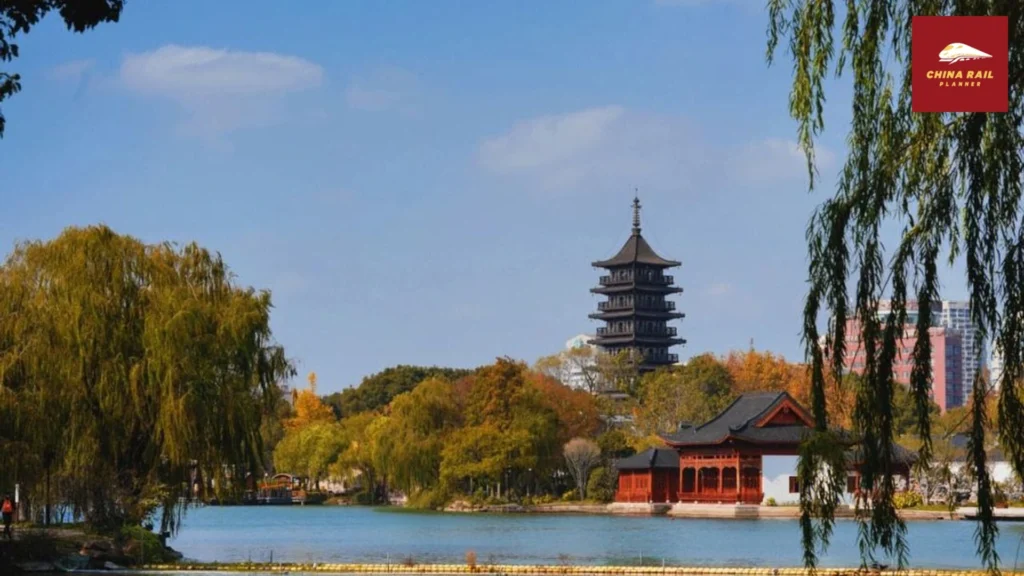
The real variable isn’t Shanghai. It’s what “Shanghai” means in your plan.
When someone says “13 nights in Shanghai,” they usually don’t mean 13 nights inside Shanghai’s city limits. They mean 13 nights with Shanghai as their hotel base, some number of which get spent in Suzhou, Hangzhou, or Nanjing — cities that are absurdly close by rail, not “day trip” close in the tired, exhausting sense that phrase implies in most countries, but genuinely fast:
- Shanghai to Suzhou: roughly 25–30 minutes on the fastest trains, departing every 10–15 minutes for most of the day
- Shanghai to Hangzhou: 45 minutes to an hour, depending on train class
- Shanghai to Nanjing: about an hour on the quickest services
That’s the actual reason the “how long for Shanghai” debate never resolves — half the people answering it are describing a trip that’s really “Shanghai plus the wider Jiangnan region,” and the other half are describing “Shanghai, the city, evaluated on its own.” Those are two different trips with two different right answers, and arguing about which one is correct is like arguing whether a sedan or a truck is the better vehicle without agreeing on whether you’re hauling furniture.
Checklist Shanghai — Bund, Yu Garden, a food street, Tianzifang, maybe the aquarium — genuinely fits in 3 days. If that’s what you’re after, more time than that is real diminishing returns, and you’d get more out of spending the extra nights in Suzhou or Hangzhou instead.
Anchor Shanghai — using it as a comfortable, well-connected base while you range out into the region — can absorb a week or two without running dry, because you’re not actually spending all of it inside Shanghai. You’re spending some of it in three or four different cities that happen to all be within an hour’s train ride of your hotel.
Neither framing is more sophisticated or more authentic than the other. They’re just different trips.
A third option almost nobody mentions
Every version of this debate cites the same three regional add-ons: Suzhou, Hangzhou, Nanjing. All three are genuinely excellent choices. But there’s a fourth city sitting almost exactly on the rail line between Shanghai and Hangzhou that essentially never comes up: Jiaxing.
I spent several years in Shanghai leading a software engineering organization of close to 280 people as eBiz Head at Citi — a role with the kind of constant resource-management, stakeholder, and performance-review load that leaves you needing an actual reset most weekends, not another checklist item. My reset, most weekends, was two nights in Jiaxing.
Jiaxing doesn’t show up in these threads for a specific, avoidable reason: its two famous sub-destinations, the water towns Wuzhen and Xitang, have become brands of their own — people book “Wuzhen,” not “Jiaxing,” the same way people book “Zhouzhuang” without registering it sits under Kunshan. And Jiaxing’s actual headline landmark, South Lake, is built around a different audience entirely — it’s the site where the CPC’s founding congress convened in 1921, and its primary visitor draw is domestic “red tourism,” a genre of travel content that essentially never crosses into English-language forums.
I knew exactly what South Lake’s historical significance was. I was there for none of it. I went for the water, the quiet, and two nights of actually sleeping — an outlier among the pilgrimage visitors, there for scenery rather than history, and it worked perfectly well as exactly that. You don’t have to engage with a place’s primary framing to get real value out of visiting it.
If your version of this trip is “anchor Shanghai” rather than “checklist Shanghai,” Jiaxing is worth putting next to Suzhou and Hangzhou on your shortlist — not as a bigger, better-known attraction, but as the quiet option when you’ve already done the well-known ones and want two days that feel like an actual break rather than another set of sights.
A simple way to decide which trip you’re actually planning
Before you argue with yourself about how many nights to book, answer two questions:
- Are you after checklist Shanghai or anchor Shanghai? Be honest about which one you actually want — there’s no wrong answer, only a mismatched one, where you book two weeks for a three-day trip’s worth of interest, or three days for a trip you actually wanted to spend two relaxed weeks on.
- How much of your total trip do you want to spend riding the region, versus staying put? Given how fast and frequent the rail connections are, “how many cities” is much less of a tradeoff here than it would be almost anywhere else in the world — the constraint is really how much moving-hotels fatigue you’re willing to take on, not how much travel time it costs you.
If you’re still not sure whether your specific split of nights and cities actually holds together — whether you’ve left yourself a brutal back-to-back of long rail legs, or booked into a national holiday period without realizing it — run it through our Itinerary Sanity Checker. It won’t tell you which kind of trip to want. It’ll tell you whether the trip you’ve already decided on is realistic as planned.